


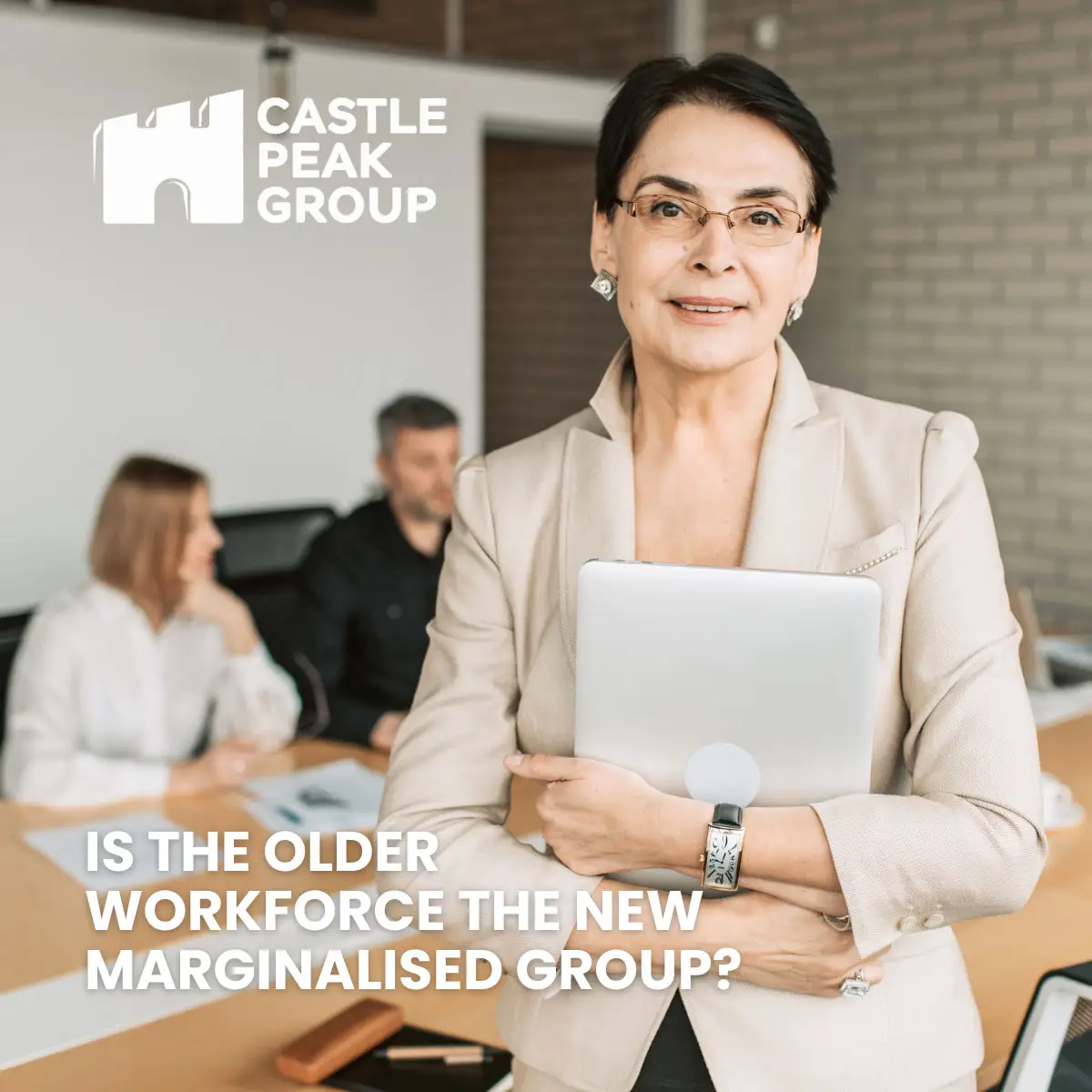
The conversation around diversity and inclusion is continually evolving. Organisations increasingly understand the value of representation, the importance of lived experience in leadership and the role of inclusion in shaping trust and better outcomes.
Yet one dimension remains comparatively under-examined: age.
As the UK population grows older and government policy encourages people to extend their working lives, many professionals in their fifties and sixties report feeling overlooked, undervalued or pushed out of the workforce altogether. This prompts an important question: in an era of modern inclusion, is the older workforce becoming a marginalised group
The Demographic Reality: An Ageing Workforce Met with Persistent Stereotypes
The UK population is ageing rapidly, in line with trends seen across many European nations. By 2030, one in five people will be over 65, and the proportion of older workers in the labour market has grown steadily for two decades.
However, participation among over-50s has fallen sharply since the pandemic, with more than 3.5 million people aged 50–64 now economically inactive.
Many report that they would return to work if the right conditions were available, including flexibility, meaningful roles and work environments where they feel valued.
This sits against a backdrop of persistent assumptions:
- Questions about pace or adaptability
- Concerns about digital capability
- Assumptions about tenure or future progression
- A tendency to favour “fresh energy” over expertise
What Marginalisation Looks Like in Practice
Marginalisation in the workplace is often subtle and systemic. It may show up through:
- Recruitment language signalling preference for younger candidates (“fast paced”, “dynamic”, “energetic”)
- A reluctance to shortlist candidates with long tenure in a single organisation
- Development opportunities disproportionately weighted to early-career talent
- Succession conversations dominated by narrow assumptions about “future potential”
The Centre for Ageing Better highlights that one in five people aged 50+ are disadvantaged in recruitment due to age.
When consistent patterns of bias and reduced opportunity emerge, exclusion becomes structural rather than incidental.
Why Organisations Need Older Voices More Than Ever
Public service organisations in particular benefit profoundly from the experience and judgement mature professionals bring.
They offer:
- Context and continuity, developed over years of navigating policy cycles, restructures, regulatory change and crises
- Deep understanding of communities, especially in sectors such as housing and health
- Judgement shaped through lived experience, crucial for risk management and governance
- Relationship capital built over time
- Mentorship and knowledge transfer, strengthening organisational culture and resilience
These are contributions that cannot be accelerated or quickly replicated.
Research from the OECD and the AARP shows that age-diverse teams outperform single-age teams on innovation, problem solving, and productivity.
And Why Younger Voices Are Equally Essential
It is equally important to recognise the value younger professionals bring:
- Fresh thinking and challenge to legacy systems
- Comfort with emerging technologies and digital innovation
- Perspectives aligned with younger service users, tenants, patients, or students
- Awareness of evolving social values and expectations
Their insight is critical for organisations that must adapt to rapidly changing environments.
___________________________________________________________________________________
The strongest teams – operational, executive and board level – are those where the imagination of newer voices sits alongside the informed judgement of experienced leaders.
___________________________________________________________________________________
The Policy Paradox: Encouraging Longer Careers Without Supporting Them
Government policy signals an expectation that people will work longer, including potential future changes to the state pension age.
However, the infrastructure to support longer working lives remains inconsistent:
- Limited investment in mid- and late-career reskilling
- Early career-focussed development frameworks
- Lack of structured return pathways for senior professionals
- Insufficient flexibility at senior levels
- Persistent age bias in recruitment and promotion
The result is a contradictory landscape: organisations need people to work longer but often operate in ways that inadvertently push them out.
The Opportunity: Multigenerational Leadership as a Strategic Asset
For public service organisations, age diversity is not just a workforce issue – it is a governance imperative.
Leadership teams that reflect a range of ages:
- Better understand the breadth of community needs
- Bring a balance of innovation, challenge and stability
- Make more rounded and evidence-informed decisions
- Build credibility and trust among stakeholders
- Foster a culture where contribution is measured by value, not by years served
________________________________________________________________
Age-inclusive cultures strengthen leadership effectiveness and organisational resilience.
________________________________________________________________
What Organisations Can Do Differently
- Review recruitment processes: Audit job descriptions and person specifications for coded language that may disadvantage older or younger applicants.
- Diversify leadership pathways: Ensure talent pipelines do not unintentionally cluster by age.
- Create structured senior return pathways: Support experienced professionals returning after a break – something common in public service.
- Invest in lifelong learning: Provide access to leadership development, reskilling and coaching at all stages of a career.
- Build intentional multigenerational teams: Design teams to leverage differences in insight and experience rather than leaving age diversity to chance.
- Challenge assumptions in succession planning: Focus on capability, commitment and organisational fit, not perceived tenure or age-based expectations.
So, Is the Older Workforce the New Marginalised Group?
The evidence indicates clear, consistent patterns of bias, barriers and stereotyping. In that sense, older workers increasingly meet the definition of a marginalised group.
But the purpose is not to elevate one generation above another. It is to recognise that high-performing organisations intentionally harness the strengths of every generation.
Age inclusion is foundational to effective leadership, strong governance and modern public service.
Closing Reflection
At Castle Peak, we believe inclusive leadership is defined not by who is in the room, but by who is heard, valued and empowered. Stronger organisations are built when experience and innovation meet; when the patience of wisdom complements the urgency of new ideas; and when every generation contributes to shaping the communities they serve.
Age inclusion is not a future issue. It is a present imperative – and one that organisations cannot afford to overlook.